Mortise & Tenon: Joining Wood Without Screws
Why are traditional wood joinery techniques still the best? Mortise, butterfly, dovetail — basic joint types and when to use them.
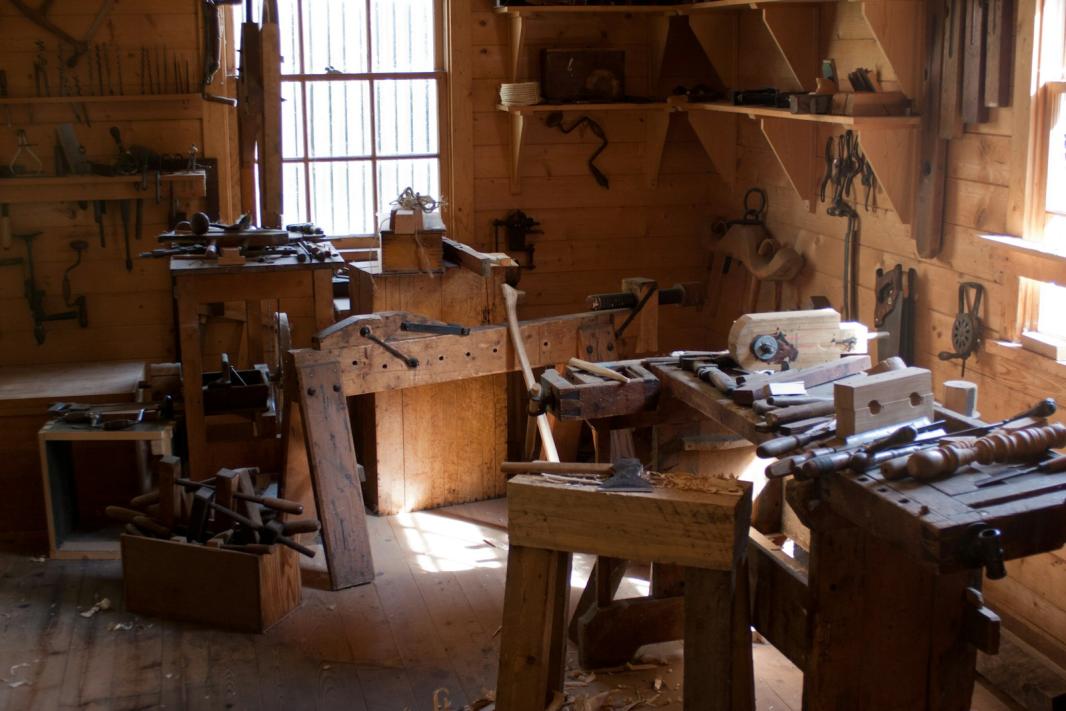
The modern building industry favours screws and glue. But in traditional woodworking, joints are secured mechanically — no screws needed when done right. Here are the fundamental joint types you should know.
Mortise & Tenon
The strongest and oldest joining method. A protrusion (tenon) on one piece fits into a recess (mortise) on the other. Door frames, table legs, chair frames — wherever high bending loads occur. A properly cut mortise and tenon joint lasts centuries; the same joint with screws loosens in a few years.
Dovetail
Trapezoidal pins create a mechanical lock against pulling forces. Essential for drawer corners; even with glue added, the drawer never pulls apart thanks to the dovetail geometry. CNC can do it too, but a hand-cut dovetail is the craftsman's signature.
Butterfly / Dutchman
This wedge with two trapezoidal arms repairs cracked wood or decoratively stabilises natural cracks in slabs. You'll frequently see it in epoxy tables and live-edge tops.
Box Joint / Finger Joint
Regular rectangular fingers provide a large gluing surface at corners. A practical alternative to dovetails for drawers and boxes; produced quickly by CNC.
When Is a Screw OK?
Not always wrong. For shelf brackets, concealed mounting connections, removable parts, screws are a reasonable choice. But for structural load-bearing joints — table legs, chair arms, cabinet frames — mechanical joinery should be preferred over screws.